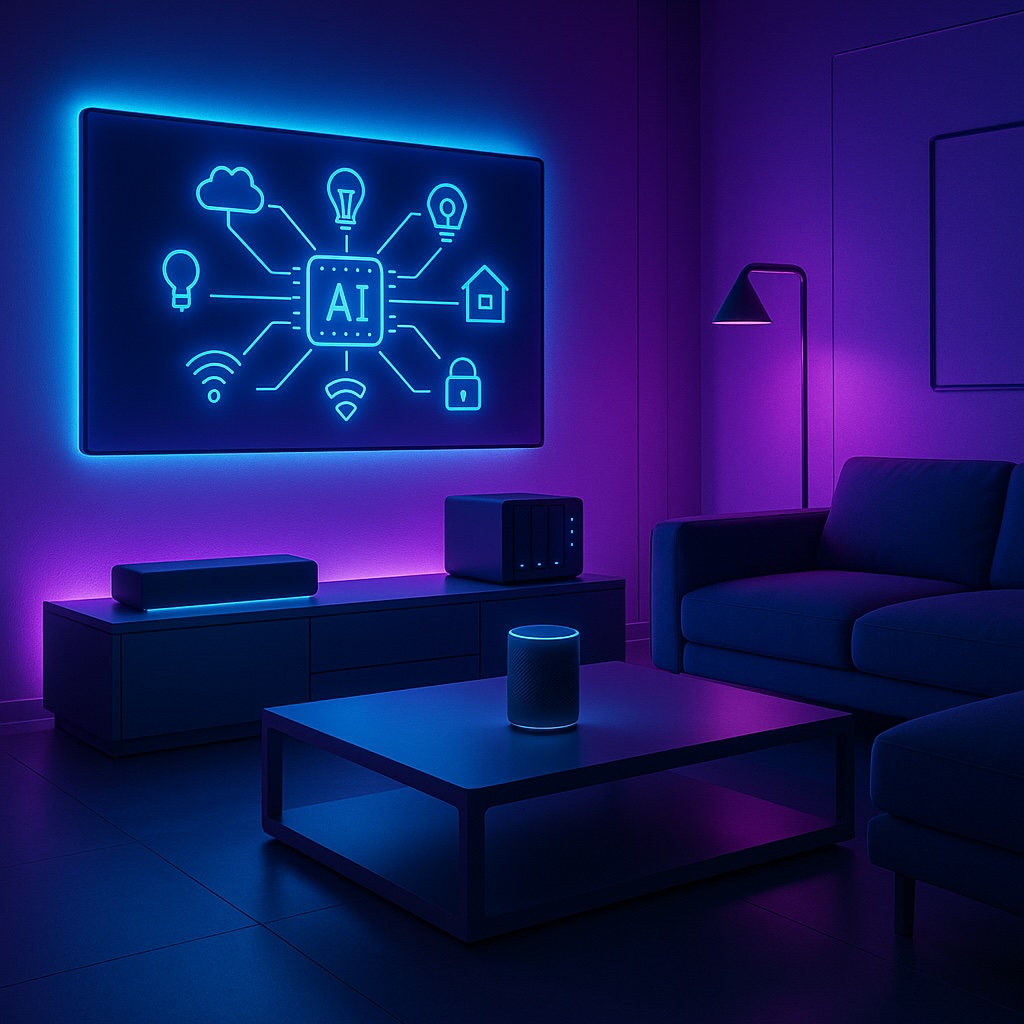
Smart homes have come a long way. What began with app-controlled lights and smart speakers has grown into connected ecosystems that manage energy use, strengthen security, and adapt to individual lifestyles. Artificial Intelligence (AI) is now taking this a step further. By learning from our habits and anticipating needs, AI makes smart homes more intuitive, predictive, and personalised than ever before.
Real-World Examples of AI in Action
AI is no longer a futuristic concept – it is already shaping daily life. Voice assistants like Alexa and Google Home respond to more than simple commands: they learn your patterns, suggest routines, and seamlessly control lighting or music. Smart thermostats such as Nest cut energy costs by adjusting temperatures automatically when you are away. Even robot vacuums use AI to map your home, avoid obstacles, and optimise cleaning routes.
These small but powerful examples highlight how AI is quietly transforming daily routines into smoother, more efficient experiences.
Security Benefits of AI
Home security is one of the biggest winners from AI integration. Modern smart cameras don’t just detect movement – they can identify whether it’s a person, a pet, or a passing car. This reduces false alarms and ensures faster, more accurate responses.
For instance, Reolink and Eufy security systems use AI to recognise suspicious behaviour, such as someone lingering outside your home. AI-driven doorbells can even tell the difference between family members, deliveries, and strangers. By filtering out irrelevant alerts, these systems provide peace of mind without overwhelming you with constant notifications.
The result is a smarter, calmer layer of security that protects what matters most.

The Pace of AI Improvements
It’s impossible to ignore how quickly AI tools are advancing. In only a few years, platforms like ChatGPT, Microsoft Copilot, and Grok have evolved from basic Q&A bots into assistants capable of handling planning, analysis, and even decision-making. The same acceleration is happening in smart home AI, meaning features that feel premium today will likely become standard tomorrow.
Think of the leap from Wi-Fi 5 to Wi-Fi 7. The difference was enormous, and AI is developing at an even faster rate. This speed matters: your smart home won’t remain static – it will continue to grow smarter over time, making each device a better investment.
What Could Be Next?
Looking ahead, AI has the potential to unlock a new wave of possibilities:
- Adaptive Routines: Instead of fixed schedules, your home could recognise if you’ve had a late night and delay the morning coffee routine. Imagine lights staying dimmed a little longer and your coffee maker waiting until you’re actually awake.
- Energy Optimisation: AI could predict peak electricity prices and run appliances such as dishwashers or EV chargers at the cheapest times. Picture your EV charging automatically at 2 a.m. when energy is lowest.
- Cross-Device Intelligence: Imagine your NAS, cameras, and smart speakers sharing data to create a unified, AI-powered view of your home.
These aren’t distant ideas – the technology already exists. What’s left is integration and refinement.

Should You Upgrade? A Quick Checklist
Not sure if you’re ready to lean into AI-powered smart home tech? Here are a few practical checks:
- Wi-Fi: Do you already have reliable Wi-Fi and a solid base of smart devices? (If not, check out my guide on Wi-Fi 6/7 Explained.)
- Compatibility: Are your devices ready for Matter or other new standards?
- Automation: Do you want routines that adapt to your lifestyle rather than just follow set schedules?
- Cloud vs Local: Are you comfortable with cloud-based AI, or do you prefer local processing?
- Security: Have you put measures in place to protect your data?
If you tick most of these boxes, you’re in a good position to start adding AI-driven features.

Final Thoughts
AI isn’t just hype – it’s already reshaping the way we live with technology at home. From smarter security to lower energy bills and personalised routines, the benefits are here and growing fast. The real challenge is deciding when to adopt and which tools to trust.
For many households, the best path is to start small. Add an AI-enhanced camera, try an adaptive thermostat, or set up an AI-powered routine in Home Assistant. As the technology matures, you can build out a smarter, more responsive system that truly makes life easier.
If you’re planning upgrades, visit my Recommended Gear page where I highlight reliable options across networking, NAS, and smart home setups. Pairing the right hardware with emerging AI features will help you create a home that’s not just smarter, but genuinely more helpful.
The future of smart homes isn’t about gadgets — it’s about creating a home that works seamlessly in the background, so you can focus on living. With AI, that future is closer than ever.
Leave a Reply